




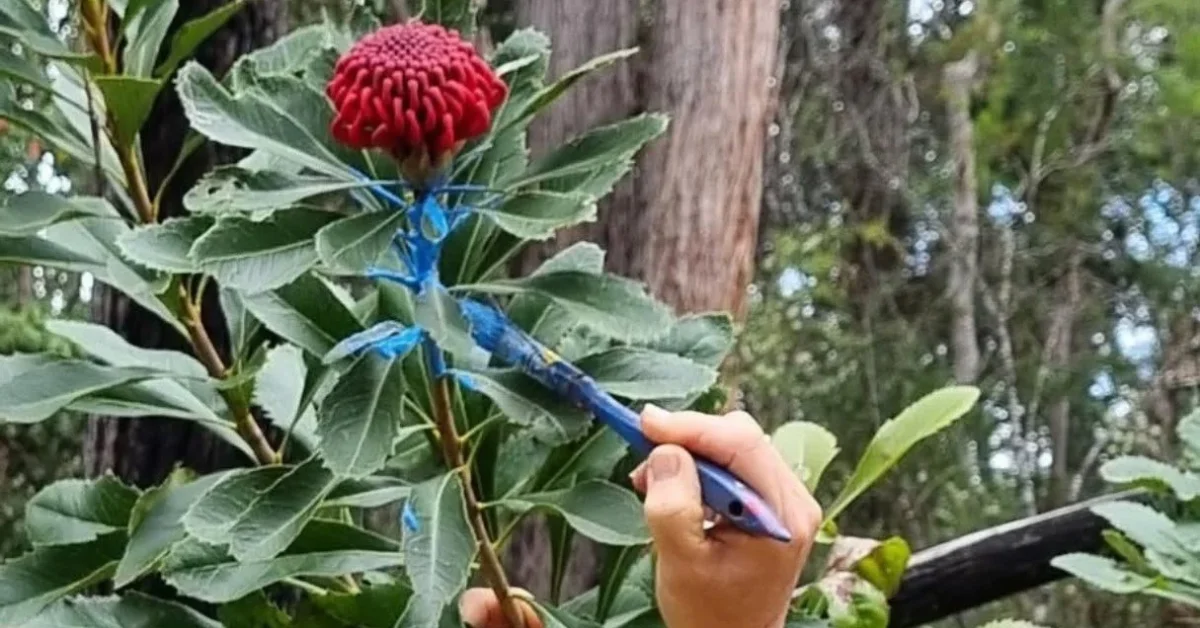
A crimson waratah flowering at West Head has been given an unusual streak of blue paint, with NSW National Parks and Wildlife Service workers using the non-toxic marking to discourage people from stealing the protected native flowers.
Read: Former Firefighter Reunites With Paramedics Who Saved His Life Near Ku-ring-gai Chase National Park
The measure has been introduced in Ku-ring-gai Chase National Park during the spring flowering season, with the blue paint intended to make the blooms less attractive to people who might cut them for commercial sale or private displays. The unusual markings may stand out against the surrounding bushland, but their purpose is to deter the removal of flowers before they disappear from the park.
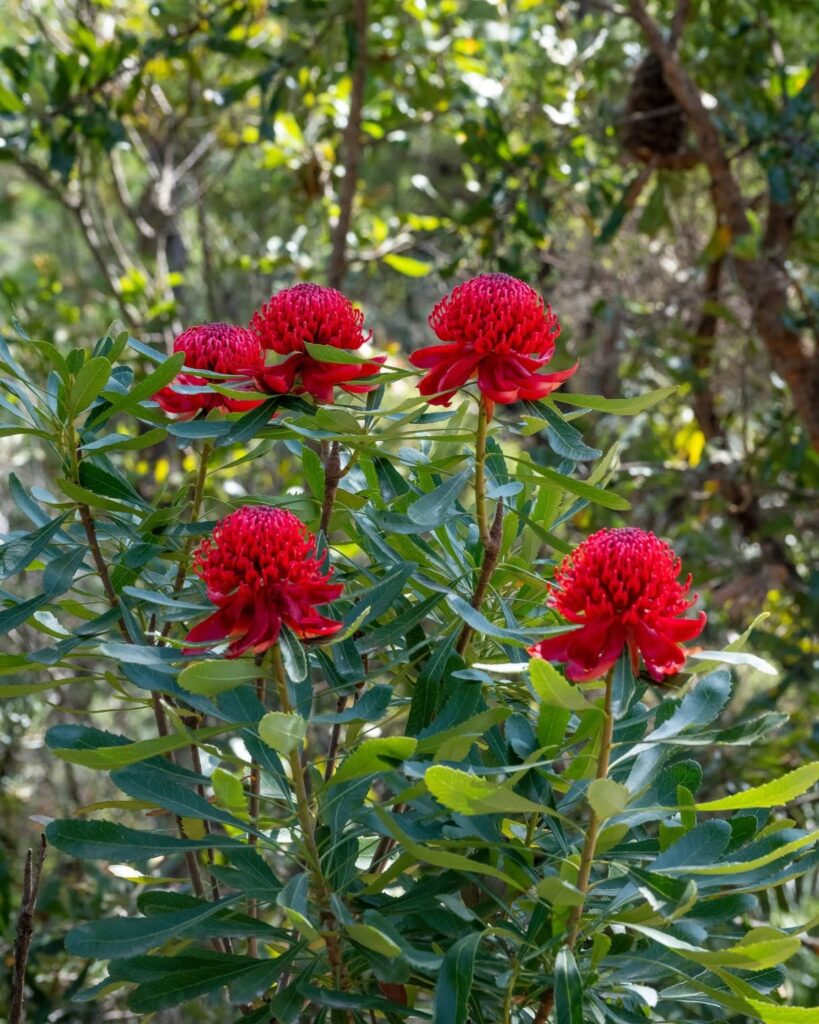
The campaign is also unfolding close to the Palm Beach community, with West Head overlooking Pittwater and providing views towards Barrenjoey Headland. Ku-ring-gai Chase National Park and the waterways around it form part of the landscape familiar to people travelling between the northern beaches and Palm Beach.
Waratahs are among the plants found in the park’s heathlands, with NSW National Parks identifying spring as a particularly good time to see wildflower displays along the Waratah walking track at West Head. The crimson blooms are a seasonal feature of the bushland, while historical records and more recent reports have documented people illegally removing wildflowers from the area.
A Native Flower With A Long History
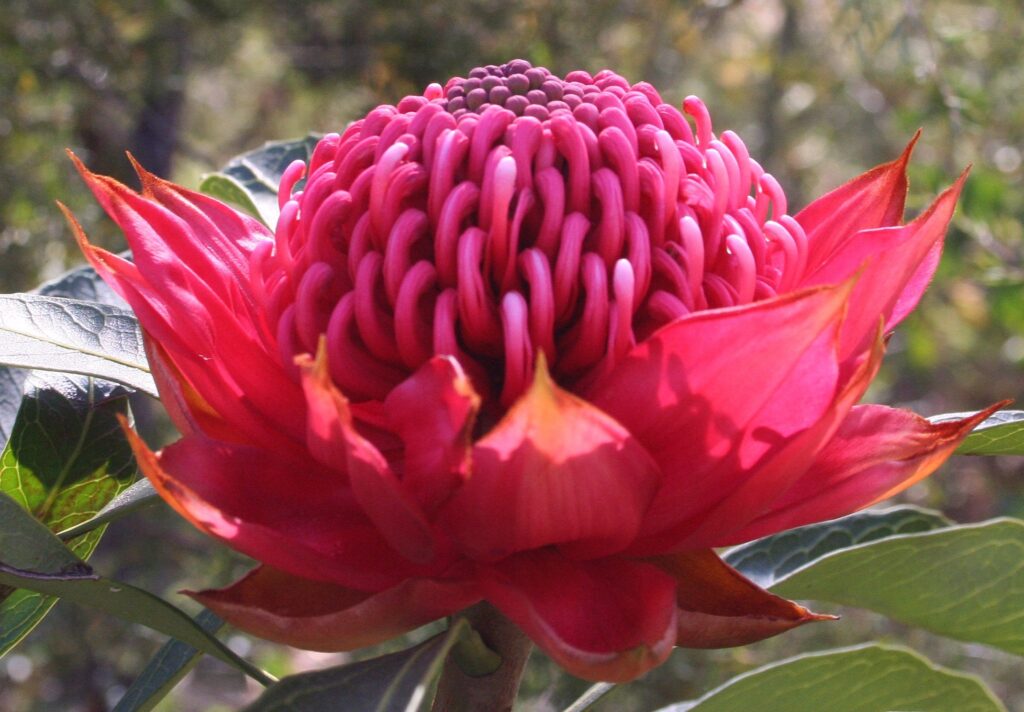
The waratah, Telopea speciosissima, is NSW’s floral emblem and one of the state’s best-known native plants. Its crimson flowerheads can measure up to 15cm across, while the species grows naturally on sandstone ridges and in forest understorey around Sydney and elsewhere in NSW.
The species is protected in NSW, while commercially cultivated waratahs can be grown and harvested under licensing arrangements. Florists source commercially produced waratahs through native-flower farms and wholesale markets, rather than taking blooms from wild plants in national parks.
The problem of people removing wildflowers from Ku-ring-gai Chase is considerably older than the latest blue paint campaign. A historical account published by the Hornsby Shire Historical Society records what it describes as a major raid in September 1951, when about 3,000 waratahs in full bloom were reportedly stripped during a single operation.
The account said the flowers were taken by professional pickers using a truck and were believed to have been sent to Melbourne for sale. By October that year, it estimated that up to 250 people were operating as wildflower thieves in Ku-ring-gai Chase, targeting waratahs along with flannel flowers, native roses, boronias and Christmas bells.
Historical records also show the broader problem of commercial removal of native flowers from the area goes back even further, while reports of illegal waratah picking have continued in more recent years.
A 2024 report about Brisbane Water National Park on the Central Coast said more than 20 protected waratahs had recently “disappeared”, amid warnings about the penalties that can apply to people who illegally remove native plants.
The blue-paint approach itself is also not new. Research published by the Botanic Gardens of Sydney examined a waratah theft reduction program at Brisbane Water National Park in which blooms were painted blue. The study found the treatment had not significantly reduced theft during the period examined, although it documented the extent of flower removal and its potential effect on reproduction.
Picking Wild Waratahs Can Lead To Fines
Removing a waratah from the wild in a national park is prohibited under NSW laws protecting native plants, while national park rules also prohibit people from picking flowers or removing plant material.
NSW National Parks and Wildlife Service rangers can issue on-the-spot fines for certain offences, while court proceedings can attract higher penalties depending on the offence and the legislation applying to it. The Biodiversity Conservation Act 2016 sets a maximum monetary penalty of $22,000 for an individual where the relevant Tier 4 penalty applies.
Read: What Palm Beach Residents Need to Know About 1080 Poison and the New Ban
Visitors who encounter flowering waratahs in Ku-ring-gai Chase must leave the plants undisturbed, rather than cutting blooms for a vase, display or other use. The blue paint changes the appearance of some plants, but its stated purpose is to discourage people from removing the flowers from the wild.
The blue markings may prompt a second look at an otherwise familiar bushland scene. The painted blooms are a visible reminder that the crimson flowers growing in Ku-ring-gai Chase are protected native plants, rather than wildflowers available for picking.
Published 26-September-2026